Meal planning is often a big hit in dieting communities, and it’s easy to see why – it offers structure and frees your mental energy from the endless “what should we eat for dinner” question.
With having a tangible plan, you go get the grocieries from the list, prepare your meals and suddenly, your week should feel much easier.
In theory, it sounds amazing.
The issue is, when you’ve spent a long time dieting, meal planning can bring up lots of feelings that definitely aren’t ease.
It can feel like another set of rules.
Yet another list of foods your “should” be eating – often without the regard to your preferences, or your real life.
It can feel exactly like another diet – a plan you’re supposed to follow perfectly, controlling what you eat and how much.
And when you don’t, the inevitable feeling of “here, I failed again”.
This isn’t helpful at all.
So we’re going to do it differently. Because meal planning can actually be a helpful way of taking care of yourself!
With flexible approach to meal planning, you can make your life easier with adding some structure to the meals, while also leaving room for life to happen. You still listen to your hunger and satiety signals, preferences, schedule.
You plan with a compassionate, flexible mindset where the plan isn’t a contract, but a useful guide. Which means – if you don’t follow it perfectly, there is no failure. Your life is allowed to happen, and meal plan is supposed to adjust to your life, not the other way around.

Today I’d like to share some simple tips on how to get more organized with meals without turning meal planning into another diet.
1. Flexible Meal Planning Isn’t the Same as Following a Rigid Meal Plan
Important mindset distinction!
Rigid, diet-based meal plans control your food intake, telling you exactly what to eat, when to eat, how much to eat.
They feel restrictive.
Rigid meal plans often give you a definite list of meals for the week:
– Monday: grilled chicken, rice, steamed broccoli
– Tuesday: fish, rice, steamed broccoli
– and so on.
And when you don’t follow to the list; when life inevitably happens, or you simply don’t want anymore of steamed broccoli, you feel like you’re supposed to “stick to the plan” anyway. Bringing you straight back to the dieting cycle.
With flexible meal planning, we loosen the grip. Instead of deciding exactly what to eat for each meal of the week, you learn to create some helpful options for yourself.
The goal is to make your week easier.

You might decide:
– I’ll cook a bigger batch of soup this weekend and have leftovers for a few days.
– I’ll prep some extra rice to have as a side dish; or use in a bowl, or mix up a quick risotto
– I’ll make baked oatmeal for the week – and then I can add different toppings if I feel like it
Now you’ve added some organization and structure to your week, to help you think less about “what should I eat”, without making it written in stone and creating restriction.
2. Take a Look at Your Actual Life
Before prepping anything, check your calendar. What does your week ahead look like?
Notice:
– Which days could be extra busy?
– Which days will you have time to cook?
– Which days can you have leftovers?
– Are you going to be eating out?
– Do you need to bring lunch to work?

Looking at the week ahead helps you make your meal planning more realistic. If you notice you’ll likely be working late on Wednesday, that’s probably not the day you want to commit to cooking an elaborate dinner.
Your meal plan is supposed to fit your life, not the other way around.
3. Don’t Plan Every Single Meal
There’s no need to micromanage every bite of the week.
We’re aiming for making our lives easier, not rigid and controlled.

A better way to approach meal planning could look like:
– choosing a simple breakfast you love eating over and over again (for me, it’s baked oatmeal at the moment)
– batch cook rice or pasta for 2-3 days and know what are your options to eat with it
– prep easy snacks you enjoy eating; maybe have fruits, nuts, cookies and yoghurt available, and some store-bought snacks for a quick option
When you’re not treating your meal plan like it’s written in stone, you can losen up and let the plans change.
Maybe you realize you planned pasta salad with pesto, mozarella and tomatoes for Tuesday dinner, but you really would prefer a warm meal so you pivot – and that’s okay!
Flexible meal planning leaves room for real life happening and that’s the key to success.
Plans change – it’s not a big deal.
4. Keep “I Don’t Want to Cook” Food Around
What if you’ve planned for Thursday evening to be your “cooking a delicious homemade dinner” day, but then your boss decides to be mean, you have to work late, traffic is hell and your favorite shoes break?
And then you come home, and you must cook for an hour? How about no!
Hard days will inevitably happen, and when they do, I want you to have a back-up plan, so you don’t have to groan, using last shreds of your willpower to cook elaborate dinner which you will then not even enjoy properly.
Therefore, I need you to stock your pantry wil easy options for difficult days:

- frozen meals you enjoy
- soup
- eggs
- sandwiches
- canned beans
- frozen vegetables
- pre-cooked grains
- bread
- leftovers
- easy snack foods
Having easy options allows you to take care of yourself even when you have zero interest in cooking.
Prepping eggs on toast with tomatoes takes 5 minutes and is a balanced, delicious meal.
Canned beans, pre-cooked rice, sauce you’ve prepped on Sunday and whatever veggies are the easiest for you – lovely bowl!
Frozen meal, microwaved – convenience foods are meant to be convenient.
5. Think of Meal Prep as Self-Care, Not Self-Control
This is the main idea I’d like you to take away from this article. Meal prep is supposed to work around your life, making your life easier – not add another tedious chore to your already never-ending to-do list.

So let’s release the idea that it has to be about discipline, about having perfect 21 meals in the fridge – no matter how pinterest-worthy that looks.
The goal is just to make eating easier, nourishing yourself a bit lighter.
Preparing lunch or two in advance can mean:
I’m making my evening after a busy day easier.
Having quick options for “I don’t want to cook” days can mean:
I can take care of myself even when I don’t have much energy.
And leaving room for life to happens helps you feel calmer around food. And when food feels easier, life feels lighter too!
Want a More Flexible Way to Meal Prep?
If all these tips sound lovely, but you’d like a deeper dive to teach you exactly how to put them in practice, I’ve made something for you!

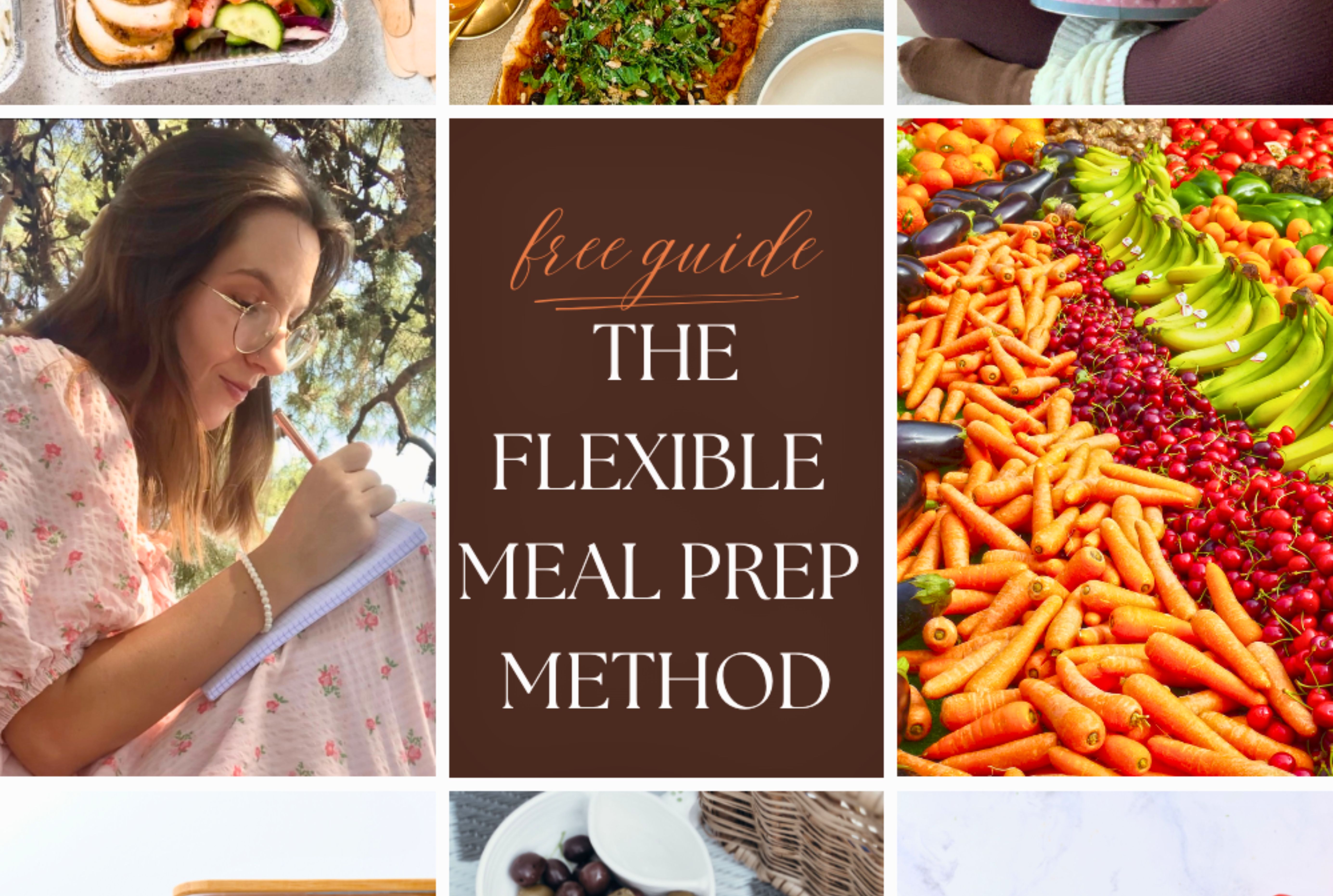
The Flexible Meal Prep Method
It’s a free guide designed to help you prepare for the week without taking away your flexibility around food. Because flexibility allows calm.
Inside the guide, you’ll learn how to:
- use a simple mix-and-match method instead of planning every meal
- build satisfying, balanced meals from flexible components
- keep your kitchen well-stocked
- plan for busy schedules and unexpected changes
- avoid falling into the restriction → overeating → guilt cycle
- create a meal prep routine that actually fits your life
You’ll also get practical planning pages and templates to help you put the approach into practice.
Ready to make food feel easier and calmer?
Enter your email and I’ll send the guide straight to your inbox.
Leave a Reply