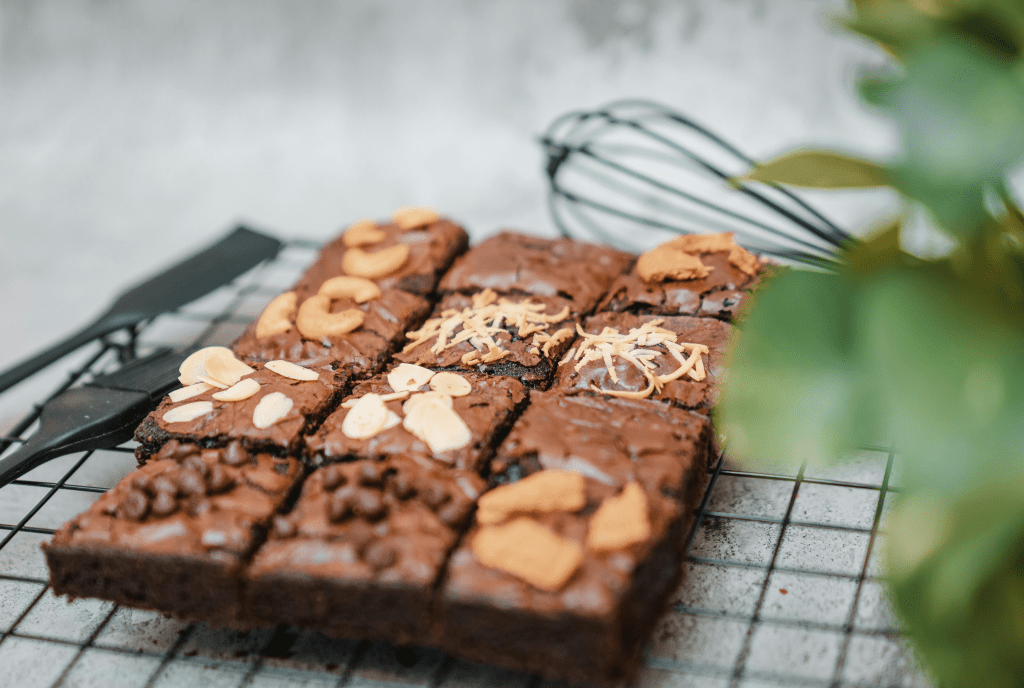
When we hear about food cravings in the diet culture world, they are often, if not always, presented as this big problem, ruining all your “work and progress”, all your “being good” when it comes to food. Often, the suggestions on how to deal with them are similar to suggestions on how to fight your hunger (which is a natural, and GOOD signal from your body) – chew a gum, eat a “healthy alternative”, most commonly – if you crave chocolate, eat some nuts.

If you’ve ever tried any of these tips, based on my rich experience working with women who struggled with food, I’ll take a wild guess on how it worked out; best case scenario, it worked out well a few times. But inevitably, you ended up eating the nuts or rice cakes or another “healthy alternative”, you chewed gum, went for a walk and called a friend, and then, at some point (for many of my clients, usually in the evening), you ate the chocolate. And ice-cream. And a pack of cookies, for good measure. Since “you already ruined everything.”
You felt defeated, you felt like a failure, you felt like you’re just “weak” and “lacking willpower”, and everyone else but you has this whole food thing figured out. Guilt, shame, and empty promises of a “new diet starting tomorrow.”
Sounds familiar?
No worries, I have good news for you!

Cravings aren’t the enemy. Craving don’t happen out of nowhere; they’re a natural response to deprivation.
When we look at the cravings from a food freedom perspective, they’re make complete sense.
In this article, I will show to you that you’re not a “failure, lacking willpower”, and that you can work with your body, instead of constantly fighting food cravings.
What Are Cravings, Really?
With cravings, your body is trying to tell you something. Usually, they signal a certain need. It could be a physical need, like requiring energy, or pleasure that comes from eating. Perhaps it’s an emotional need, like comfort, relief from something negative like pain, or grounding. Often, it’s a mix of both.
Now, we’re often been led to believe that (fictional!) “healthy” people who have their ducks in a row when it comes to food don’t experience cravings. “Healthy” body wouldn’t possibly crave chocolate, chips or a hearty bowl of pasta. This is a lie.
As human beings, we’re wired to seek and enjoy energy (provided by foods rich in carbs and fats), pleasure, satisfaction and safety. Food can satisfy all of these needs, and wanting these foods is just a part of being human.
So when you crave a brownie, you’re just human, and I’ll argue that every person you think has it together and “eats perfectly” has cravings too, because they’re human as well. Their Instagram profile might look like they’re superhuman, but, as I’ve mentioned many times before – you can never, ever know what’s happening behind the scenes. You don’t know what that beautiful, blonde, thin girl who shares carnivore oreos (which should be ILLEGAL) recipes does at 3AM when nobody’s recording.
Therefore, I urge you with all my love, give yourself a break – instead of “fighting cravings”, fight that mean diet culture voice inside you whispering horrible things about your body because you enjoyed a real oreo. Or 5.
The No.1 Reason Cravings Get So Intense: Restriction
Which leads us to the biggest trigger when it comes to cravings: restriction.
Restricting your favorite foods inevitably creates feelings of deprivation and it is the most common reason cravings feel intense, urgent, or uncontrollable.
Restriction doesn’t just mean actively dieting.
Restriction can include:
- Cutting out certain foods, perceived as high in fat, carbs, or calories
- “Saving calories” for later, i.e. skipping lunch to be allowed to enjoy a slice of pizza later
- Labeling foods as “good” or “bad”
- Telling yourself “I’m not allowed to eat that”
We you decide some delicious food is bad and forbidden, it becomes more desireable. The more you try to restrict, the more your body will push for the food, and after a while, this results in food cravings getting so strong it’s impossible to feel any sense of control.
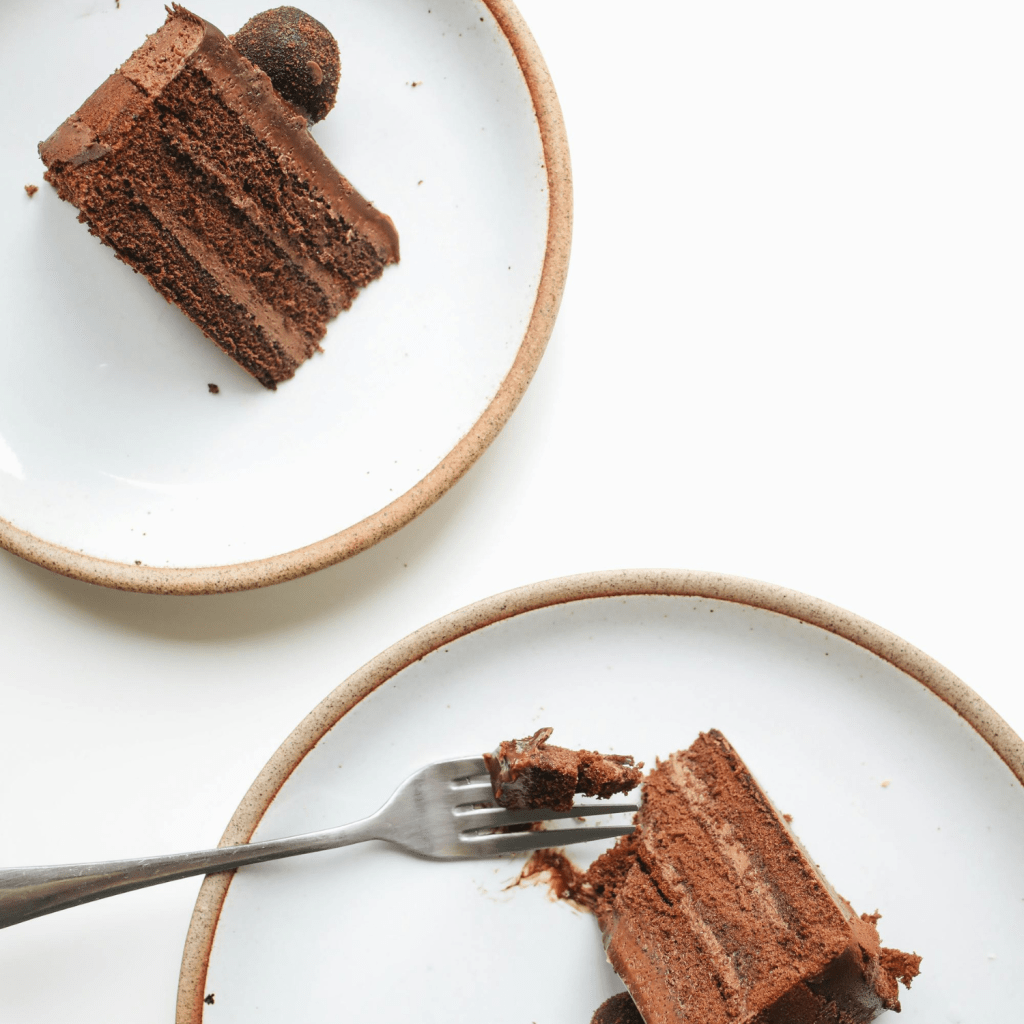
Many of my clients in the beginning report feeling completely out of control when they finally give in to their cravings, not enjoying a moderate amount of desired food, like a rib of chocolate or a slice of cake, but overeating – eating an entire chocolate, half the cake, all while berating themselves for “being so bad”, and believing they’re “addicted to food” because the deprivation got so bad they just couldn’t fight it anymore.
This is a natural response to restriction and deprivation; your body thinks it’s starving, and intense cravings are a protective response. Because famine directly threatens survival, so your body will send ALL the signals to feed it foods that are energy rich, and that are rich in easily available energy; cue carbs and fats.
The survival response body creates is also why introducing previously forbidden foods is used in binge eating recovery; when the food is regularly available it’s just not that interesting.
Other Reasons Cravings Show Up
However, not all cravings come from restriction, and not all craving are so dramatic.
Sometimes, we get so busy with life, or just so immersed in an interesting task the we forget to eat, or simply don’t eat enough. It happens to the best of us!
Or maybe, we eat on the go, and our meals end up being rather bland and unsatisfying, they just don’t hit the spot.
Another possible reason is not eating often enough – if the gaps between our meals are too long, the blood sugar can drop significantly and we might get signals of “eat all of the chocolate, right now”. Another perfectly normal situation.

Besides, stress can play a role too. If you’re consistently stressed, your nervous system might crave some delicious, crunchy chips to provide it with relief. Food happens to be a reliable way to feel temporary relief from overwhelming, intense feelings.
(And then, I’ve noticed in my years of experience, my clients turn from seemingly overwhelming stress to “feeling fat” because they ate a bag of chips, and turn to ignoring the real problem, and focusing on starting a new diet because we’ve learned that diets solve every problem – this is a really powerful thing to dive into when we work together! The breakthroughs that come from exploring this alone are worth booking a session with me right now: here.)
Another important thing to mention is mental restriction; you might tell yourself you will eat some chocolate, but you still kdon’t feel comfortable doing so, and believe it’s wrong and bad to enjoy chocolate.
This is a common trap for people who go through intuitive eating journey alone; they say they “allowed themselves to eat the forbidden food”, when in fact, in the back of their minds they were still berating themselves, feeling guilty for eating it – and then, ending up saying “intuitive eating doesn’t work for me”.
Because, if permission is followed by guilt, compensation, or (upcoming) rules, the body stays on high alert.
If this is you, I’d would love to invite you to book “Intuitive Eating Coaching Package” and we’ll move through this bump on your journey together. Having a qualified professional guidance will propel your intuitive eating journey in the ways you can’t even imagine, I promise!
How Intuitive Eating Approaches Cravings
With intuitive eating, as usual, we don’t approach cravings as labeling them as this horrible lack of willpower and a proof you must get yourself under control and be stricter with yourself.
With intuitive eating, we don’t even focus on eliminating cravings. Because, as we’re established, they’re just a part of being human.

Instead, we go down the good old self-compassion route. We investigate what’s behind the craving.
On your intuitive eating journey, you might ask yourself:
- What is this craving trying to tell me?
- What am I feeling right now?
- Am I hungry, did I eat enough? Were my meals satisfying?
- Am I stressed, tired, overwhelmed?
- Do I need more support in my life?
Instead of control, intuitive eating urges you to stay curious and connected to yourself and your needs.
When you choose to trust yourself and know that your body is doing its best, you can allow yourself to stay with the feeling.
And then, when you’ve taken a moment to mindfully consider what’s going on, you can choose a response:
- Great, I will go eat mashed potatoes, dinosaur chicken nuggets and broccoli because that’s satisfying and full meal I need after functioning on coffee, sheer spite and a sad sandwich all day.
- Actually, I feel angry and want to smash something, and I don’t think loudly crunching chips would do me any good, I will go hit a pillow (and yell into it since I’m on it), angrily jump on the trampoline, do some air boxing, run around the block or call a friend for some venting.
- Oh, so I just needed a good cry? What a relief!
- Yes, I do truly need to enjoy a piece of this decandent, luxurous chocolate cake, I indeed know this will fix everything in this moment.
See how this allows you to act, instead of simply reacting and getting lost in berating, evil diet culture mind chatter?
The goal here is to nurture, and lovingly respond, not berate and control!
A key part of this process is unconditional permission to eat. When food is consistently(!!) available and not followed by punishment, the sense of urgency often fades over time. Not because cravings disappear, but because the body no longer needs to shout.
Healthy relationship with food doesn’t mean never craving anything, it simply means cravings don’t run the show anymore – when you accept them, investigate them and mindfully, lovingly respond, they’re a valuable part of your eating world!
You Don’t Have to Figure This Out Alone
Understanding cravings intellectually is one thing. Rebuilding trust with your body in real life is another.
If you’ve been stuck in cycles of restriction, cravings, guilt, and starting over, it’s not because you haven’t tried hard enough. It’s because this work is not meant to be done in isolation. We all have blind spots when it comes to growth and nurturing ourselves!
Healing your relationship with food requires unlearning and straight up deeply ingrained beliefs – that are reinforced daily wherever you look, listening to signals that may have been ignored for years, and practicing new responses in moments that feel vulnerable and charged.
That’s hard to do without support! And it’s even harder with that mean voice in your head has been shaped by diet culture for a long time.
This is where working with a trusted professional makes a difference.

In my intuitive eating coaching, we don’t just talk about cravings. We look at why they show up for you, in your life, what your body has learned over time, and how to create real safety around food again.
You get guidance, structure, and compassionate accountability so you’re not constantly second-guessing yourself or wondering if you’re “doing it right.”
This journey becomes easier (and faster, honestly) when you’re supported, when someone helps you connect the dots. And far more sustainable when you don’t have to carry it all on your own.
If you’re ready to stop fighting your cravings and start understanding them, I’d love to support you. You can book a free discovery call to see whether my coaching packages are the right fit for you and where you are right now.
You don’t need more willpower.
You need and deserve support that actually meets you where you are.
 Nina Kaufmann
Leave a comment